

Life has different colors, shades, or palettes for everyone just like a box of crayons of different colors evoking different emotions and communicating different feelings for each person. That’s how powerful a box of crayons is — the colors to be exact.
Colors are an effective medium to convey messages. It can even create a lasting impression. When used accordingly, colors can trigger the desired emotion.
As a business owner and marketer, it is crucial to consider the impact of color on your business. It can make your brand stand out or lose out.
Thus, it is important to really understand how color affects advertising, as well as how it affects your life, and the lives of your prospects and customers to be able to use the right colors for all your marketing efforts.
So today, we will look at the importance of colors, understand the theory of colors, and learn how to use the right colors in images. We will also look at three tools that can help us in knowing which colors work best, specifically, in promotional ads.
The Importance Of Color
Color is everywhere. It dominates our surroundings and plays a vital role in the world in which we live.
Simply, color can sway thinking, change actions, and cause reactions. It can soothe or irritate eyes, raise blood pressure, or even suppress appetite.
Similarly, color plays an important role in business. The colors used in a product, website, business card, or logo cause powerful reactions. The key is you want the right reactions.
But you will only be able to get the right reaction if you use the right colors and you will only be able to use the right color combination if you understand the theory of color.
Understanding The Basic Theory Of Color
Color may seem like a trivial matter but it actually influences people’s perception of your business. It indirectly affects your advertising conversions and revenue growth.
So, whatever you do, whether branding, creating graphical content for blogs or social media, or images for promotional ads, it is very important to understand the basic theory of color.
You need to be able to use the right color combination that conveys your brand’s message to the audience through your logo, website, business cards, or promotional ads.
You can achieve this goal by understanding the basics of colors such as the types, schemes, and meanings.
Color Types
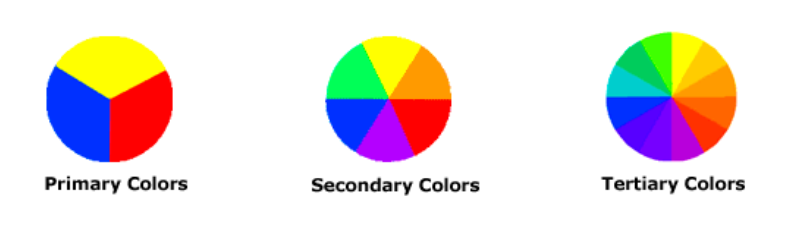
In primary school, you may have remembered that there are three types of colors: primary, secondary, and tertiary.
The primary colors are actually mixed to make the secondary colors. The secondary colors are then mixed to make the tertiary colors.
That’s the main thing you should remember when it comes to matching the right colors for your brand.
When choosing the color for your brand, start with the primary color first, then, match out based on that primary color.
Color Wheel & Color Schemes
To fully understand the basic theory of color, let us take a look at the concept of the color wheel.
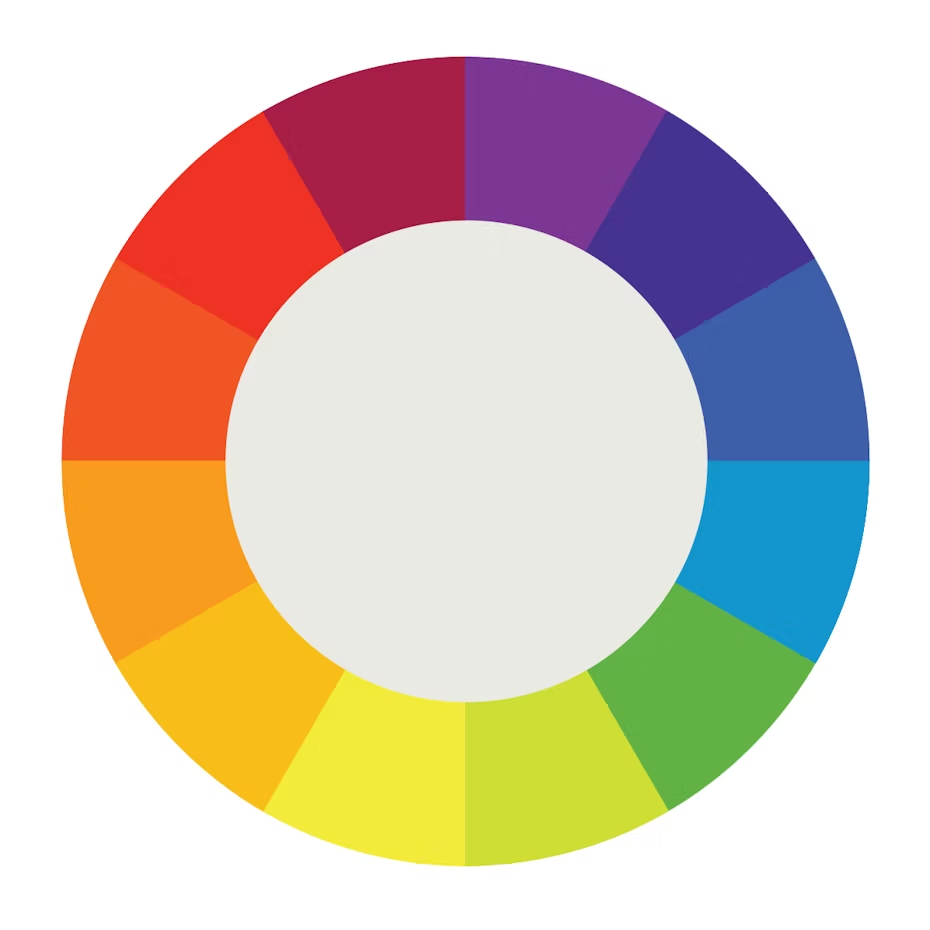
A color wheel is an illustrative model of colors in a circle. It is just a wheel broken up in how colors are aligned with each other. It basically shows the relationship between colors and is definitely helpful in determining the perfect color combination.
The color wheel helps you determine the color scheme that is pleasing to the eye. You can either go for complementary, monochromatic, analogous, or triadic color schemes to name a few.
The Complementary color scheme is composed of two colors opposite to each other. This color scheme gives a high impact and high contrast combination. This combination will appear brighter and prominent.
Monochromatic is composed of three shades, tints, and tones of one base color. This combination gives off a harmonious look.
Analogous is composed of three colors sitting side by side on the color wheel. Though a versatile combination, it can be overwhelming.
The Triadic color scheme consists of three colors evenly spaced on the color wheel. This color combination gives off a bold and vibrant sensation.
These color schemes will help you find the matching colors that can blend together to make an awesome image and help you create that reaction or those actions that you are seeking from your customers to do.
Meaning of Colors
Another thing you should bear in mind when choosing the right color for your brand and your promotional content is the meaning associated with them.
As a business owner or marketer, it is important to be aware of the color meanings to help you choose your brand colors wisely to be able to stir up the right emotion to the target audience.
Red is typically associated with love, blood, fire, power, energy, and passion. But it is also associated with anger, aggression, and violence.
Yellow is usually associated with sunshine, joy, optimism, bloom but also associated with caution and jealousy.
Blue is mostly associated with integrity, loyalty, intelligence, and peace but sometimes can mean detachment or coldness.
Green is for health, growth, renewal, and money but can also mean greed and poison.
Purple is connected to luxury, royalty, and wealth but also connected to cruelty.
Orange conveys energy and creativity but can also convey loudness.
Depending on how much of the color you use and in what theme you use the color can convey different messages.
It is likewise important to note that certain colors have a certain element within some cultures or countries.
In Japan, yellow is connected to courage.
In most Asian countries, red is linked to marriage and prosperity.
In most countries, blue is considered a masculine color. But in China, the color blue is for little girls.
So if you plan to have an international brand, make sure you understand the cultural differences.
Picking The Right Color
If you are able to pick the right color for your brand that not only attracts the eyes but also tells a message subconsciously to the people, you are helping your business grow, especially in terms of sales.
This is the reason why most restaurants use Red to induce appetite and banks use Blue to induce trustworthiness.
Here are the ways on how you can effectively choose the right color combination for branding or promotional ads.
1. Pick a primary color
When choosing the right color, it is best to pick a primary color first. Then, start looking for the perfect color combination from the primary color you choose using the color wheel.
As a general rule, business or brand colors for your website, flyers, logos should be aligned to the culture you want your business to be or with the emotion that you’re wanting to draw across in your promotional ads.
So with this, you may want to check back the different meanings of colors and see which best fit for your business.
2. Pick a secondary and tertiary color
Now, this is where the color wheel really starts to show its power. As a general rule, don’t use more than three to four colors when deciding on your brand or ad color palette.
You choose what color scheme you should use based on your primary color.
3. Align colors with cultural themes
When choosing colors for your promotional ads, social media posts, blog posts, you can align them with the cultural themes aside from the brand’s color scheme.
So, during Christmas, you can use red or green to indicate the festive season. On Valentine’s Day, you can also use Red which is for “I Love You”.
4. Study the countries’ culture
Culture can have a factor in your overall advertising. Thus, if you are dealing with other cultures or running an ad into the other parts of the world, make sure you take time to understand their culture so as not to relay a different message through your choice of color.
Easy-To-Use Color Matching Tools
Now, while you can match the colors on your own based on your instincts and taste, as an owner or marketer who has a lot on your plates, you need to do things as fast and accurately as you can.
These three color wheel tools are very simple and quite easy to use. All of them operate pretty well the same though they somehow have different wordings. It’s up to you to determine which is best depending on your needs.
1. Adobe Color Wheel
Adobe Color Wheel can be used to generate a color palette for Adobe products like Photoshop, Illustrator, and Fresco.
2. Canva Color
Canva Color Wheel can be used by those who prefer Canva in creating their graphical content or promotional ads.
3. Paletton
Paletton is also a good color scheme designer that shows you the different shades or tints of the color combination you choose as you move along the wheel.
The best thing about using these color wheel tools is you can automatically determine the right shade or tint for your palette through the hexadecimal codes shown when you move around the color wheel.
Conclusion
Color is very important when it comes to building a brand. It is what empowers your brand’s identity, delivers the desired message, boosts sales, and increases your brand’s recognition.